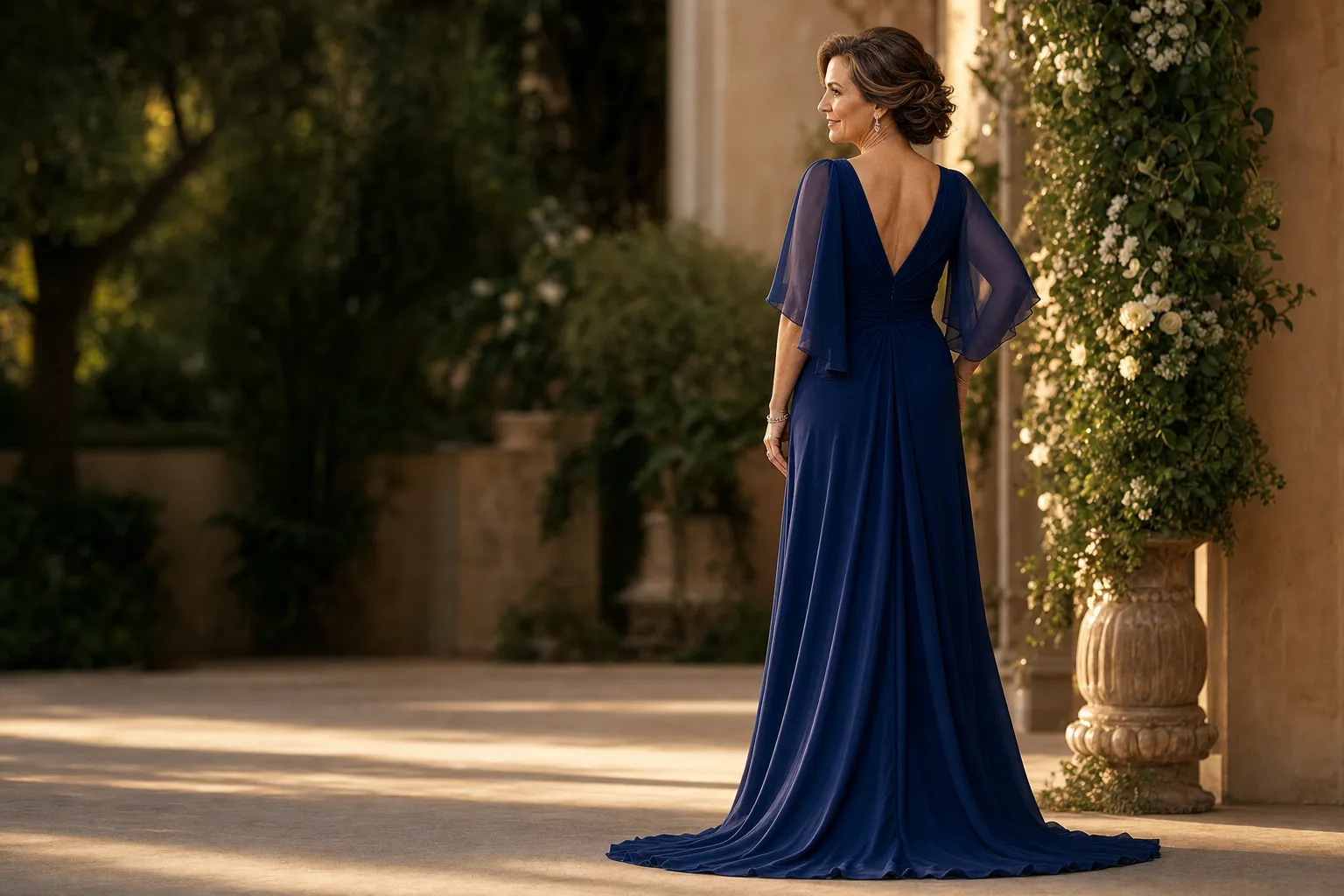
Choosing a pageant dress is not about finding the loudest gown in the room. It is about choosing a look that supports the way you move, the standards of the competition, and the impression you want to leave when you step under the lights. The right dress makes your walk feel easier, your posture feel more natural, and your presence feel unmistakably your own.
Start with the purpose of the gown before you start comparing colors or beadwork. An evening-wear look has to work from more than one angle. It needs to make sense at a distance, move well through a turn, and still feel comfortable when you are waiting backstage. That is why a clear selection process matters more than a quick search for a dress that looks dramatic on a hanger.
Start with the competition, not the trend
Every system has its own expectations. Some put a strong emphasis on classic evening wear, while others weigh confidence, presentation, personal style, or an overall fashion statement differently. Review the official materials for your competition before you settle on a direction. The National American Miss competition overview separates evening wear from its other on-stage categories, while Miss USA's areas of competition are presented as a distinct part of its program. Your own system may ask for something different.
That difference should shape the gown. A conservative, polished floor-length silhouette may be the better choice for one competition. Another may reward a sharper fashion point of view, stronger color, or more visible movement. Look at recent competition photos only as a reference for the level of formality and the range of accepted looks. Do not copy a winner's gown just because it worked on someone else. Your best dress is the one that makes your own strengths easier to see.
Choose the silhouette that helps you move
A pageant dress should look as good in motion as it does in a fitting room. Before you fall in love with a neckline or train, test the basics: take a full stride, sit, turn in both directions, lift your arms naturally, and walk as though you are entering and exiting the stage. If you have to shorten your stride, hold your breath, or keep adjusting the bodice, the dress is asking too much of you.
Column and fit-to-flare gowns can create a long, clean line and make a deliberate walk feel very strong. A mermaid shape can be beautiful when the skirt gives you enough room to step without shuffling. A ball gown offers presence and movement, but it should be balanced so the skirt does not wear you. A slit, overskirt, cape, or train can add a memorable moment, yet every added element needs a purpose and a rehearsal plan.
Think about the stage from a distance
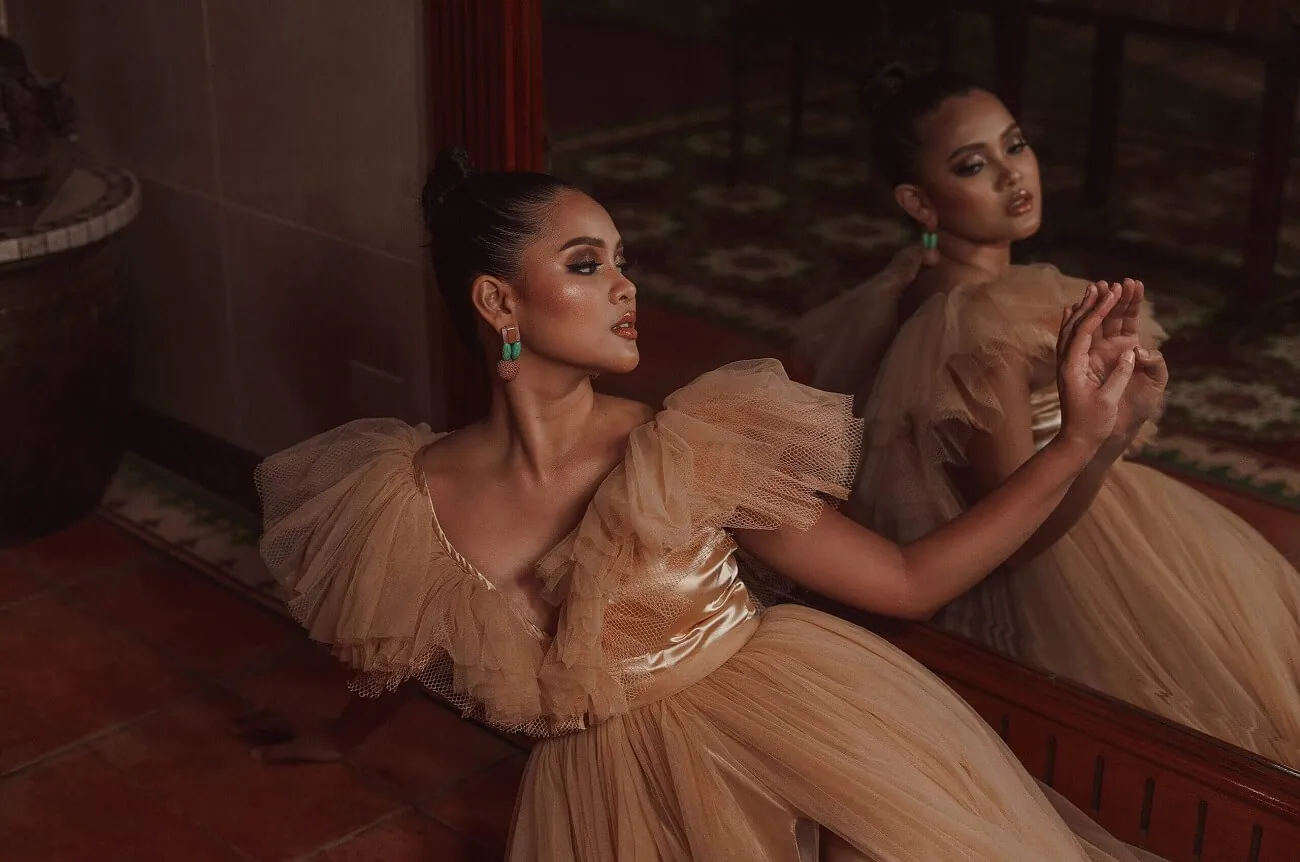
Pageant lighting can soften pale colors, flatten delicate details, and make a dress that looked intricate up close read as one quiet shape from the audience. Stand several steps back from the mirror and take a short video in the shoes you expect to wear. Watch it without sound. Can you still see the line of the gown, the waist, and the movement of the skirt? Does the color give your face enough presence?
Contrast is usually more useful than a fashionable color name. A deep sapphire, emerald, wine, or black can hold its own under bright lights. A soft neutral or pastel can be equally beautiful when the fabric brings enough depth through sheen, beading, texture, or a stronger silhouette. Metallics need the same test. A subtle bronze or silver may glow, while a reflective finish can become distracting if it catches the light from every direction.
Do not assume the color that looks best on a phone screen will be the best on stage. Ask for a short video in natural light and, when possible, test your finalists in a venue with overhead lighting. The result does not have to be perfect. You are looking for a dress that keeps its shape, color, and energy when the setting changes.
Let the dress support your personal style
The goal is not to wear a costume version of confidence. The strongest gown usually takes something you already like about your style and gives it more clarity. If you are most comfortable in a clean, architectural look, a sharp neckline and controlled drape may feel more convincing than layers of embellishment. If you love romance and movement, a soft overskirt or flowing sleeve can be a better expression than a stiff, heavily structured gown.
Start with three words that describe how you want to be read on stage. They might be elegant, modern, and composed, or dramatic, warm, and memorable. Use those words to filter every option. If a dress is beautiful but does not fit the story you are trying to tell, it will be harder to carry naturally. A gown should amplify your point of view, not replace it.
Make fit and comfort part of the design
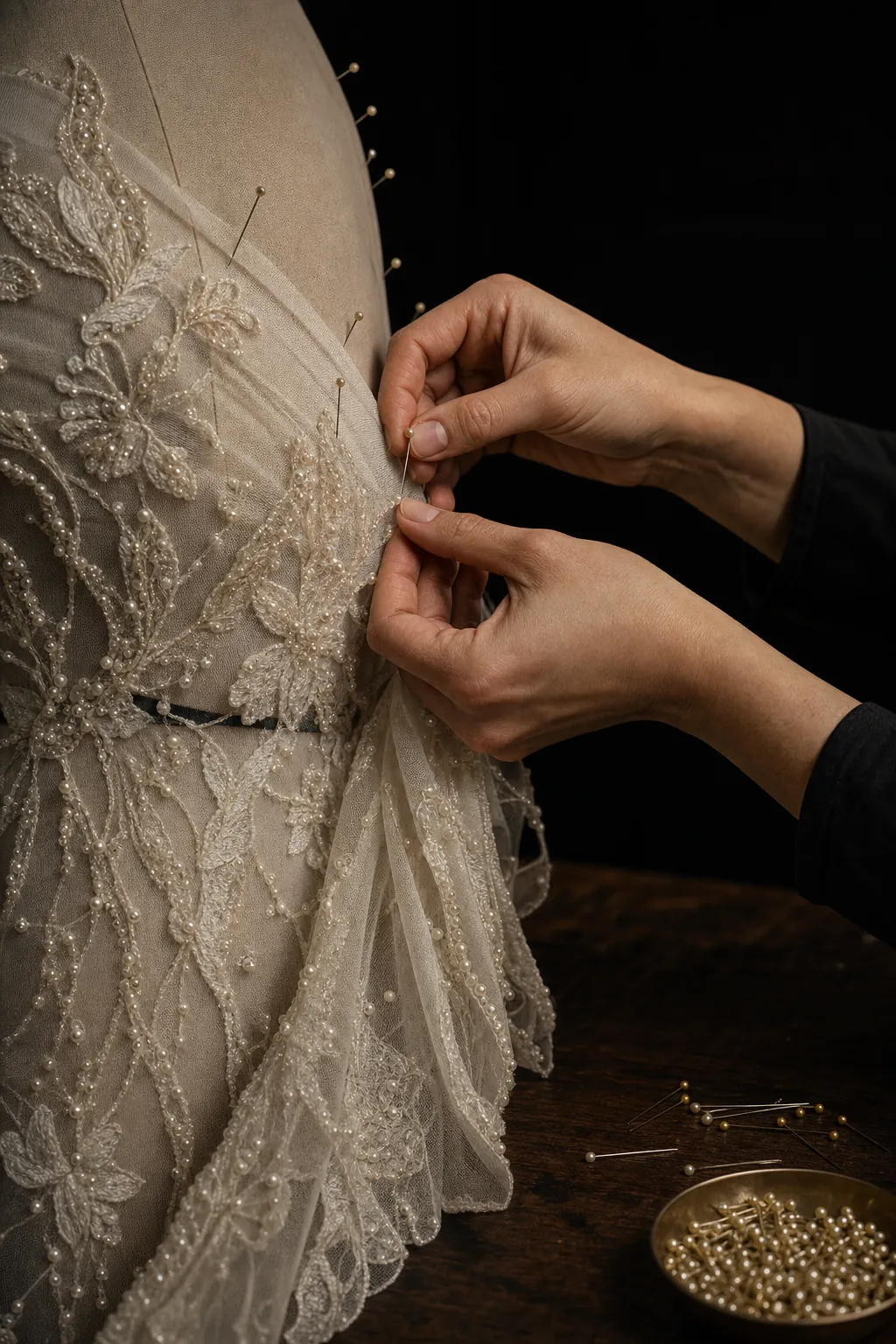
Fit is where a beautiful dress becomes a reliable competition look. A bodice should hold securely without creating pressure points. The waist should define your shape without cutting into you when you breathe. The hem should clear the floor as you walk in the actual shoes you plan to wear. These details are not minor alterations. They directly affect posture, pace, and the way you feel when all eyes are on you.
Bring the undergarments, shoes, and any competition jewelry to every meaningful fitting. A change in heel height can change the hem. A different bra can change the line of the neckline. Earrings may pull your attention toward the face or compete with an ornate shoulder. Seeing the full look together early is far better than discovering on competition day that one detail changes the balance of everything else.
Also plan for the less glamorous parts of the day. Can you sit while waiting? Can you use the restroom without turning the gown into a project? Can someone help you manage a train without touching the bodice or snagging a beaded panel? A practical answer to those questions protects your calm when the schedule gets busy.
Use detail with intention
Beading, drape, cutouts, sleeves, and detachable elements can all be memorable. The key is choosing one or two ideas that deserve attention rather than putting every idea into the same gown. If the fabric already has strong shine, a quieter silhouette may let it read more elegantly. If the shape is simple, a precise beaded pattern or dramatic back can become the focal point. When both the silhouette and embellishment are very busy, the overall look can lose its clean first impression.
Look for details that work during movement. A train can create a beautiful exit if it falls back into place after a turn. An overskirt can give you volume without committing to a full ball gown. Sleeves can make a look feel more personal and polished when they still allow a relaxed arm position. Before choosing a statement feature, rehearse it. The dress should give you a stronger moment, not one more thing to worry about.
Build the whole look around the gown
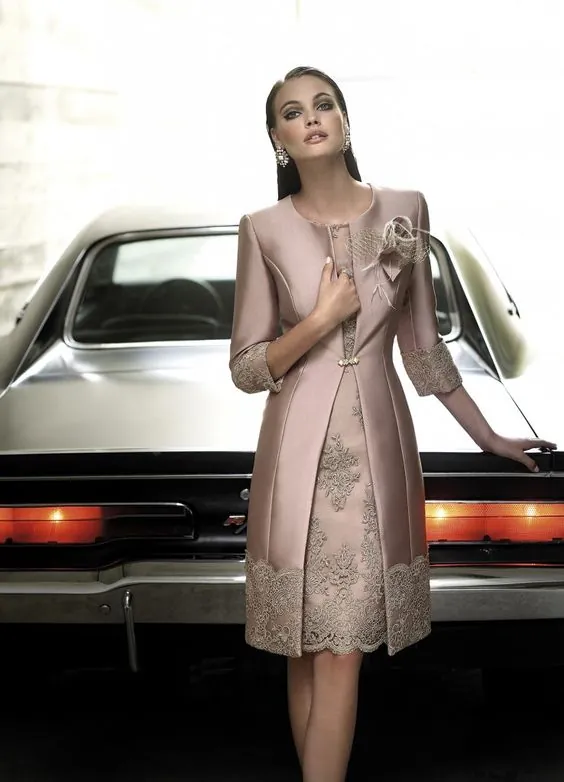
Once the dress is set, let it lead the rest of the styling. Shoes should support your walk and disappear into the line of the gown rather than compete for attention. Jewelry should frame your face or echo the dress's finish, not create a second focal point. Hair and makeup should hold up under the lights while still looking like you at a close distance.
Try the complete look in a short practice walk. Record the entrance, a turn, a pause, and an exit. Notice where your eye goes first. If the answer is your face and your overall line, the look is working. If it is a slipping strap, a shoe that shows too often, or a detail that catches awkwardly, you still have time to adjust the plan.
When custom design is the smarter choice
A ready-made gown can be exactly right when the line, color, and fit already support your competition. Custom design becomes useful when you are close but not quite there: you love the silhouette but need more coverage, the color is right but the neckline is not, or the design needs a train, sleeve, overlay, or proportion that fits your frame better.
Darius Cordell Fashions has created custom pageant gowns for decades, with room to shape the details around the person wearing them. The pageant collection is a useful place to start for silhouette direction, while the custom design process lets you bring an inspiration image, a color idea, or one detail you want to make your own. The best first conversation includes the competition date, your system's expectations, and the feeling you want to create on stage.
Give the final choice enough time
A rushed decision can make even a beautiful gown feel less settled. Give yourself time to see more than one option, compare the finalists in motion, and make small changes with a clear head. A dress that feels only almost right at the first fitting may need a different hem, a more secure bodice, a quieter earring, or one less competing detail. Those refinements are where the look begins to feel finished.
Keep a simple reference folder with the competition guidance, photos of the venue or stage when available, your shoe choice, and short fitting videos. This gives you a practical way to judge changes instead of relying on memory between appointments. It also keeps the decision focused on what matters: how the gown serves your confidence, your walk, and the story you want to tell from the first step to the final exit. After each fitting, write down one thing that feels stronger and one thing that still distracts you. That small habit makes the final choice more thoughtful and keeps a last-minute adjustment from becoming a larger doubt.
A simple pageant dress checklist
- Read the competition guidance. Confirm the dress code, category expectations, and the level of formality before you shop.
- Choose the silhouette first. Pick a line that lets you walk, turn, and breathe with confidence.
- Test color at a distance. Use video and lighting tests to see what keeps its presence on stage.
- Try the complete look together. Include shoes, undergarments, jewelry, and any removable elements.
- Rehearse in the gown. Practice your entrance, turn, pause, and exit before the competition day.
- Leave time for refinement. Alterations and thoughtful changes are part of preparing a look that feels fully yours.
Frequently asked questions
Pageant dress questions
How early should I choose a pageant dress?
Start as soon as you understand the competition date, the evening-wear expectations, and the time needed for fittings or changes. Starting early gives you room to test movement, refine accessories, and make adjustments without choosing from only what is immediately available.
Should a pageant dress be tight?
It should look clean through the torso without restricting a full breath, a natural stride, or a turn. A dress that is too tight may look still in a mirror but become difficult to walk, pose, and smile in on stage.
What pageant dress color photographs best?
The best color is one that creates clear contrast with your complexion and hair while still working with the stage, lighting, and competition. Jewel tones, rich neutrals, and thoughtful metallics often hold their presence well, but the final choice should be tested in the actual lighting when possible.
Do I need a custom pageant dress?
Not always. A standard gown can be a strong choice when its line, fit, and finish already support your competition. Custom work is most useful when you need a specific color, coverage, sleeve, train, or proportion that is hard to find in one ready-made design.
A more personal direction
Ready to refine your stage look?
Share the competition details, your preferred silhouette, and the ideas you want to explore.
Request a Quote