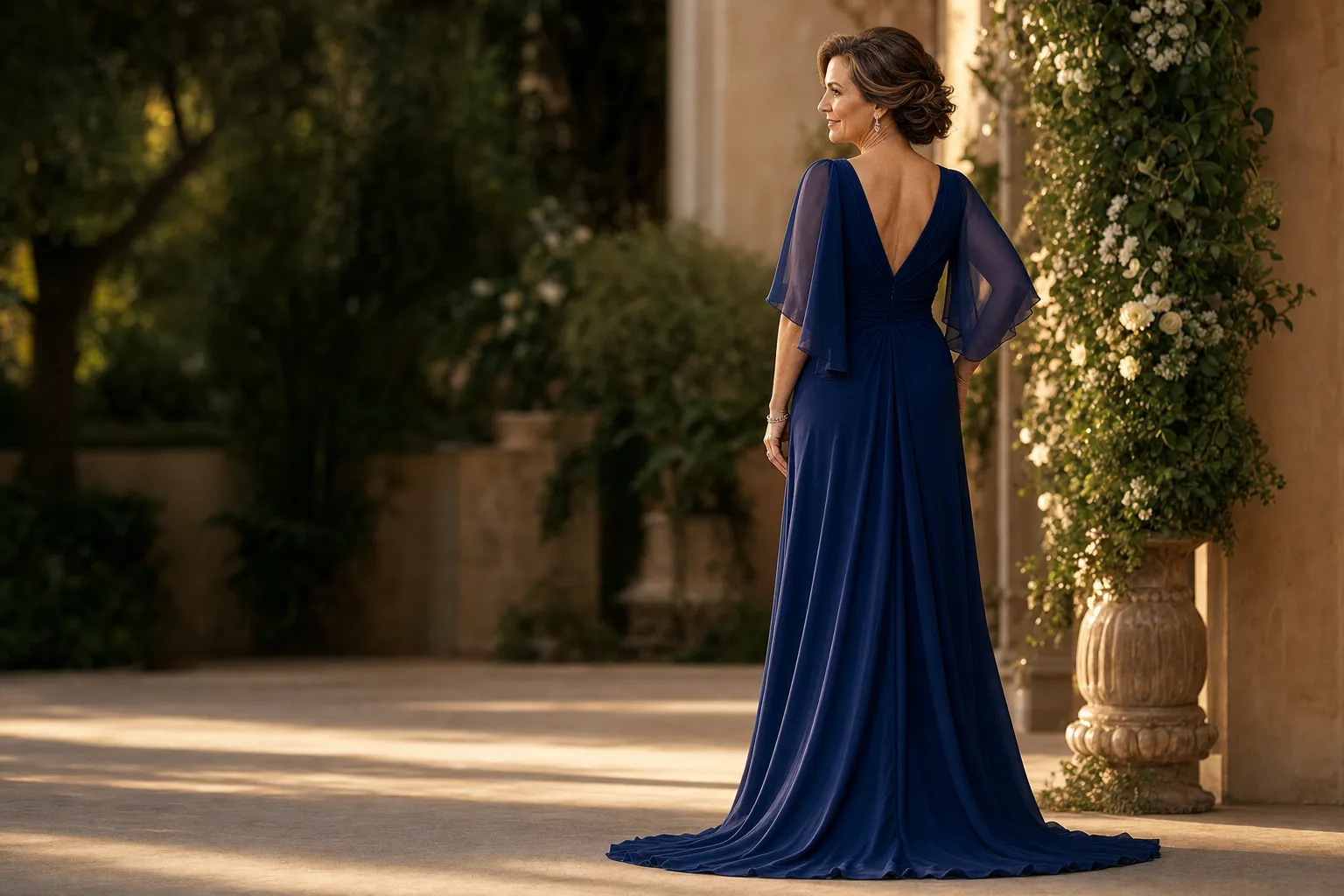
A pageant evening gown has one job before all the others: it should make it easier for people to see you. The strongest look is not always the most beaded, the widest skirt, or the brightest color. It is the gown that supports your walk, gives your face presence, and feels settled enough that you can focus on the moment instead of managing your clothes.
That is why choosing a pageant evening gown is more useful when you treat it as a sequence of decisions. Start with the competition and the silhouette. Then test color, movement, fit, and finishing details in the order that matters. This guide gives you a practical way to do that, whether you are selecting a ready-made gown or beginning a custom design.
Start with the evening-wear expectation
Before comparing gown photos, read the official guidance for your competition and look closely at what the evening-wear portion is meant to show. One system may call for classic formal elegance. Another may welcome a bolder fashion statement, more visible movement, or a particular level of coverage. The gown needs to meet that setting first, then make your personal style clearer within it.
Use recent event images as a reference for formality and scale, not as a shopping list. A winning gown can be a poor fit for a different venue, division, body proportion, or point of view. Notice the stage size, lighting, and the distance between contestants and the audience. Then write down three words for how you want to be read: perhaps polished, modern, and assured, or romantic, luminous, and memorable. Those words give you a useful filter when every option starts to look beautiful.
Choose a silhouette before you choose the sparkle
Silhouette determines how a gown reads in motion. A column gown can create a long, controlled line and a particularly strong walk. A fit-to-flare or mermaid shape can bring drama through the hips and skirt, as long as it leaves enough room for a full stride. A ball gown brings immediate presence, but it needs balance so the skirt does not become the main event. An A-line can be an elegant middle ground when you want movement without the visual weight of a full skirt.
Try the basic movements before committing. Walk forward at a normal pace. Turn both directions. Pause as though you are taking a photograph. Lift your arms and take a full breath. Sit for a few minutes if you will have a long wait backstage. If you have to shorten your stride, hold the bodice in place, or think too hard about the hem, the gown is not helping you perform at your best.
Let color create contrast, not distraction
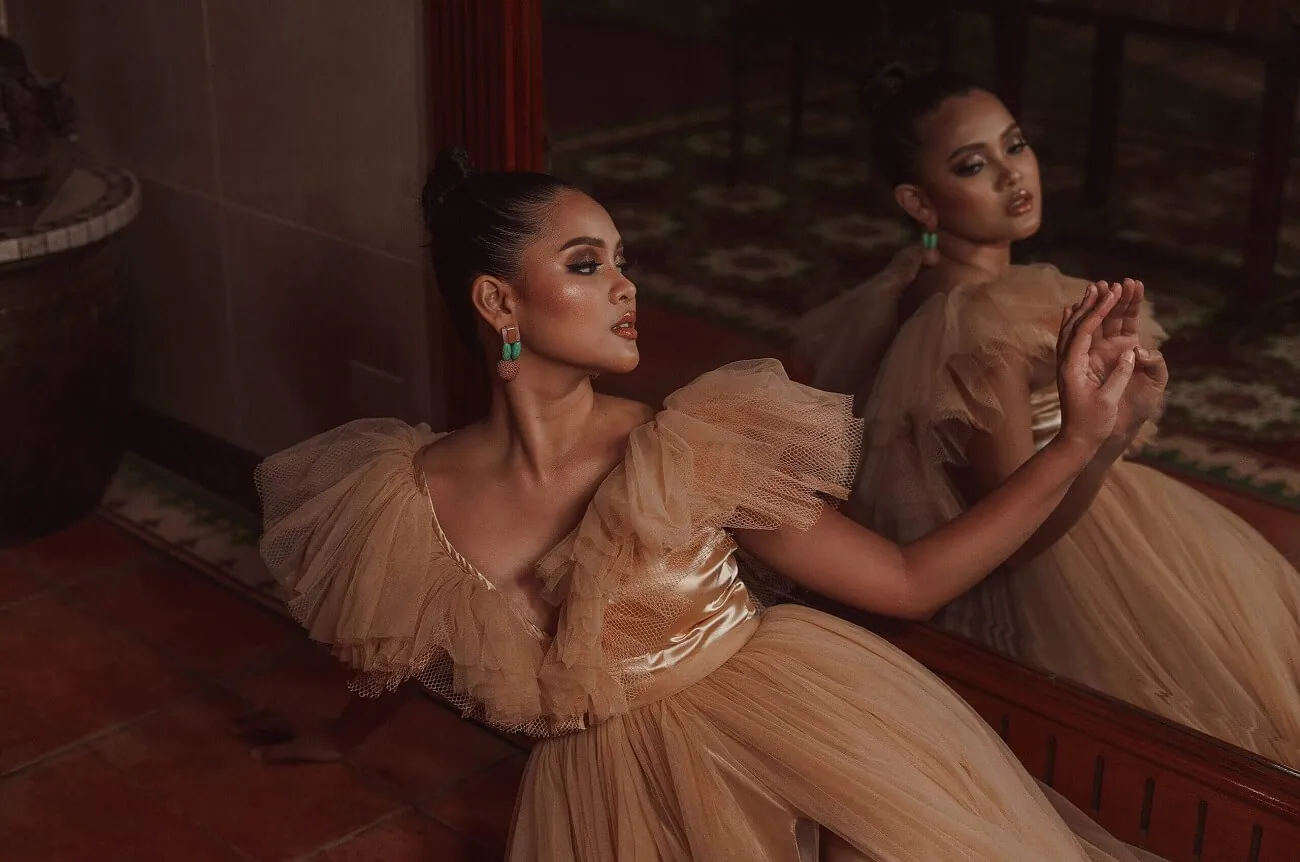
A pageant evening gown needs enough contrast to hold its place under the lights. That does not mean every contestant needs a bright jewel tone. It means the color, fabric, and finish should give your face and overall line a clear frame from a distance. A deep sapphire, emerald, wine, rich plum, or black can feel confident and refined. Soft silver, champagne, pale blue, or blush can work beautifully when the fabric has depth through texture, drape, beading, or sheen.
Test finalist colors in more than one light. Stand a few steps away from a mirror, take a short video, and watch it without sound. Does the color make your face look alert? Can you still see the waist and silhouette? Does the dress look rich rather than flat when it moves? A phone screen is not a stage, but a quick video is still better evidence than a fitting-room reflection alone. If you can test under overhead lighting or in the venue, even better.
Be thoughtful with metallics. A restrained metallic can add light and dimension, while a highly reflective surface can take over every photograph. The same goes for beadwork. A pattern that looks subtle up close may be exactly what a gown needs at a distance. The goal is not to be safe. It is to choose the detail that still lets the person wearing the gown arrive first.
Look at the color beside your hair, makeup plan, and any jewelry you expect to wear. A cool silver gown may call for stronger contrast around the face. A deep green may become even richer with a warm gold earring. These are not rules, but they are useful clues. When each detail points in the same direction, the gown feels more considered before you ever step onto the stage.
Make movement part of the design test
An evening gown is judged while you are standing, walking, turning, and waiting. Practice the full sequence in your actual shoes. Record an entrance, a measured turn, a pause, and an exit. Look for where your eye goes. A good gown should create a clean line from shoulder to hem, then follow your movement without lagging behind or pulling you off balance.
Trains, overskirts, capes, and slits can create a memorable moment, but each one needs a rehearsal plan. A train should fall back into place after a turn. An overskirt should move with the gown rather than tangle at your ankles. A slit should give you stride without opening wider than you expect when you sit or step up. These details can be striking, but only when they give you more confidence instead of another thing to worry about.
Build fit and comfort into the first decision
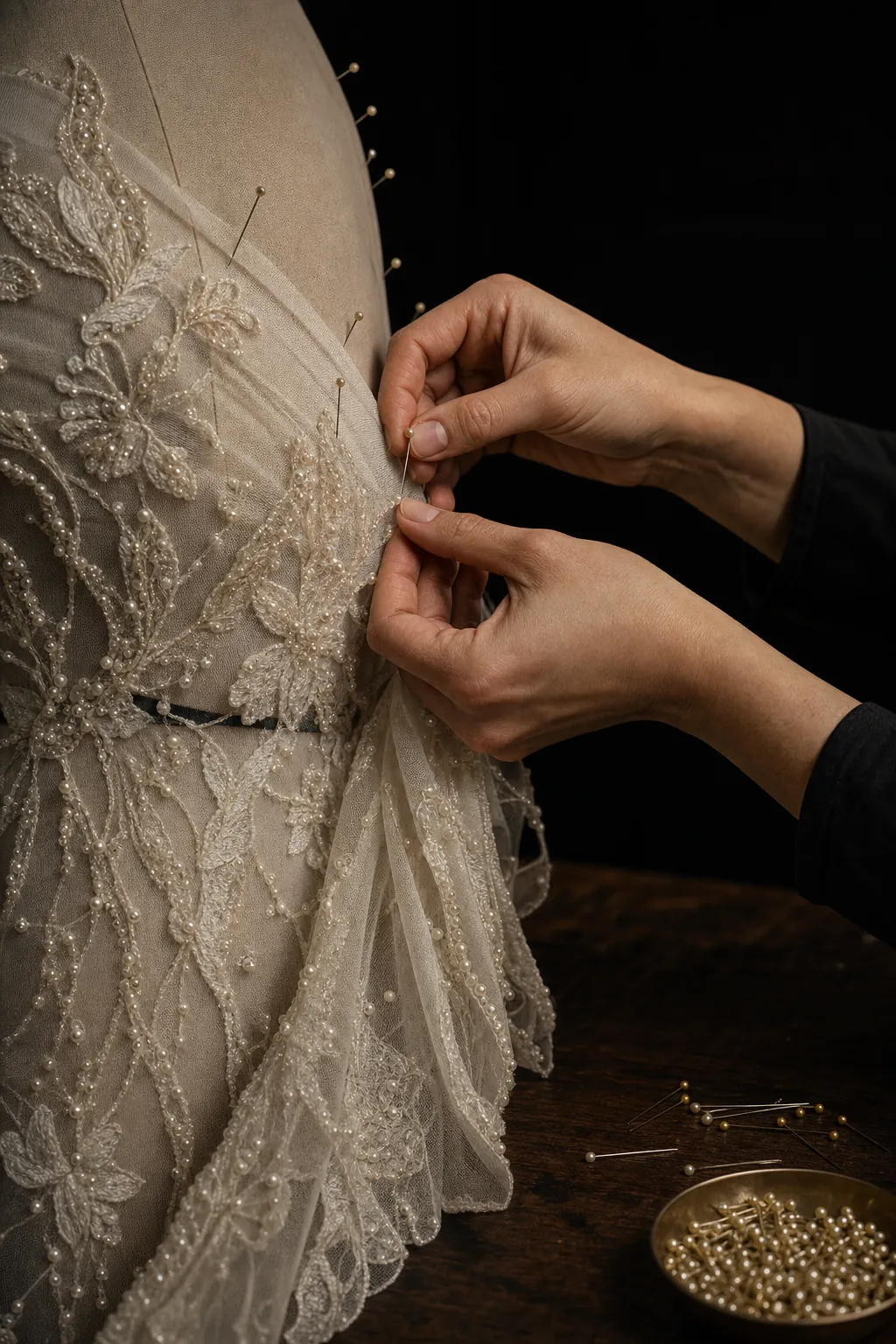
Fit is not an alteration note at the end of the process. It is the difference between a gown that looks beautiful in one still photo and a look that stays composed through a full competition day. The bodice should feel secure without creating pressure points. The waist should define your shape while letting you breathe. The hem should clear the floor in the heel height you will really wear.
Bring the actual undergarments and shoes to every important fitting. A different bra changes the line of the neckline. A slightly higher heel changes the hem. A piece of jewelry can shift attention toward the face or compete with an ornate shoulder. Seeing the complete look early lets you decide what is helping and what is merely adding noise.
Also ask the practical questions early. Can you sit backstage? Can you move comfortably through a doorway or car? Is there a simple way to handle the train if someone needs to help? A pageant gown should feel special, but it should not turn normal competition-day moments into a production. Calm reads well on stage, and comfort is part of how you get there.
Pay close attention to where the gown is secured. A strap, sleeve, or neckline that looks perfect while you are standing still may move differently during an entrance and turn. A few minutes of rehearsal can reveal whether the dress needs a firmer closure, a more supportive bodice, or a small adjustment to the shoulder line. Those quiet refinements protect the confidence the gown is meant to create.
Use one clear design idea
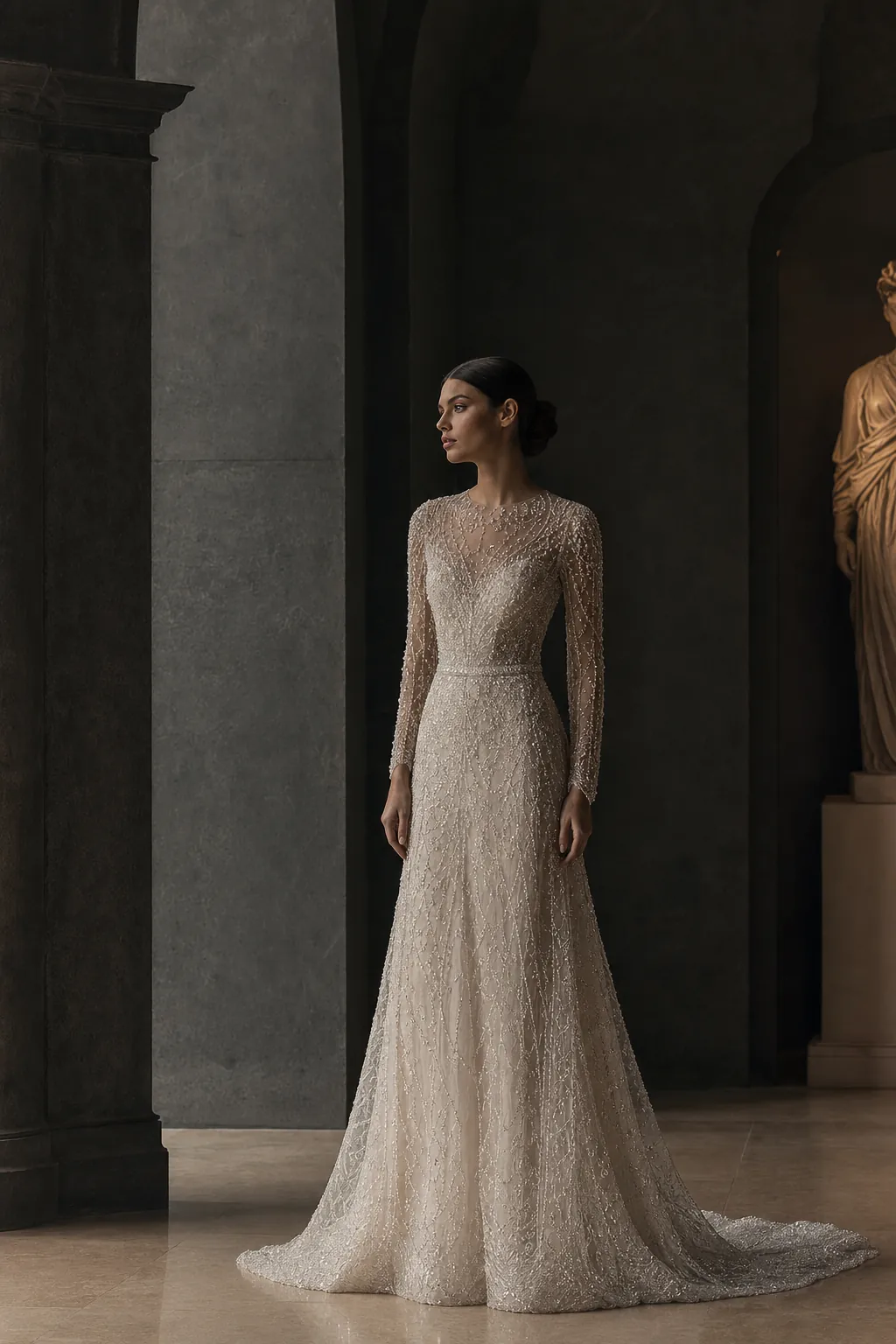
The most memorable pageant evening gowns usually have one clear idea. It might be a sculpted silhouette, a rich color, a soft cascade of crystal detail, an architectural neckline, or a dramatic skirt. Once that idea is doing its work, everything else can support it. If the fabric has strong shine, the shape may need to stay clean. If the silhouette is simple, a precise embellishment pattern or striking back can become the focus.
Trying to include every favorite detail in one gown can make a design harder to read. A bold train, a heavy beaded surface, several cutouts, and statement sleeves may each be beautiful on their own, yet compete together. Ask yourself what someone should notice first from across the room. When you can answer that in one sentence, the rest of the choices become easier.
Finish the look around the gown
Once the gown is chosen, let it guide the rest of the styling. Shoes should support your walk and work with the hemline. Jewelry should frame your face or echo the gown's finish, not create a second focal point. Hair and makeup should hold up under the lights while still looking like you at a close distance. This is the moment to simplify, not keep adding.
Do one complete practice run before competition day. Put on the gown, shoes, jewelry, and any removable elements. Record your walk and take photos from the front, side, and back. If the first thing you notice is your face and the overall line, the look is working. If you notice a slipping strap, a shoe that keeps appearing, or too many competing sparkles, you still have time to make a thoughtful adjustment.
Keep the final styling choices in one place: a photo of the completed look, the shoes, the jewelry, the undergarments, and a note about the order you will put everything on. It sounds small, but a clear plan removes one source of pressure from a busy day. When the details are already decided, you can spend more energy on your walk, posture, and the way you want to feel in the room.
When custom design makes sense
A ready-made gown can be exactly right when the color, line, and fit already work together. Custom design becomes a stronger option when you are close but cannot find the last important detail: the silhouette is right but you need a more secure neckline, the color is right but you want different coverage, or the gown needs a train, sleeve, back treatment, or proportion that feels more personal.
Darius Cordell Fashions creates custom pageant dresses around the competition, the wearer, and the details that matter on stage. Browse the pageant gown collection for silhouette direction, then use the custom design process to bring an inspiration image, preferred color, or single detail you want to make your own. The site's planning guidance is also useful when you are working backward from a competition date.
A final pageant evening gown checklist
- Confirm the competition direction. Know the evening-wear expectations, stage setting, and level of formality before you shop.
- Choose the silhouette first. Select the line that lets you walk, turn, breathe, and pose naturally.
- Test color in motion. Use a short video and different lighting to see what keeps its presence from a distance.
- Rehearse the details. Practice any train, slit, overskirt, cape, or removable element before competition day.
- Try the full look together. Include your shoes, undergarments, jewelry, and hairstyle before the final fitting.
- Leave room for refinement. The most useful changes are often small: a hem, a strap, a different earring, or one less competing detail.
Frequently asked questions
Pageant evening gown questions
What is the best color for a pageant evening gown?
The best color is the one that gives your face, posture, and overall line clear presence under the competition lighting. Test finalists in a short video and choose the shade that still looks balanced when you move away from a mirror.
Should a pageant evening gown have a train?
A train can create a memorable entrance or exit when it falls cleanly and you have rehearsed how to manage it. It is not essential. A strong, well-fitted silhouette with purposeful movement can be just as effective.
How should a pageant evening gown fit?
The bodice should feel secure without asking you to hold your breath, and the skirt should leave room for a natural stride and turn. Bring your competition shoes and undergarments to fittings so the final hem and neckline are judged as a complete look.
When should I order a pageant evening gown?
Start as soon as you know the competition date and have a sense of the evening-wear expectations. Extra time gives you room to compare options, arrange fittings, test accessories, and make thoughtful refinements before the event.
A more personal direction
Ready to choose the details that matter?
Share your competition date, preferred silhouette, and the parts of the look you want to refine.
Request a Quote